



Table of Contents
ToggleTase vs Taze: Which Spelling Is Correct? ⚡✍️
If you’ve ever typed a sentence about being “tased” or “tazed” and paused to double-check yourself, you’re not alone. The tase vs taze debate confuses a lot of people, mostly because the word sounds exactly the way it’s often misspelled.
In this complete guide, we’ll settle the tase vs taze question once and for all, and explain exactly where the confusion comes from. ✅
Tase vs Taze: The Correct Spelling 📝
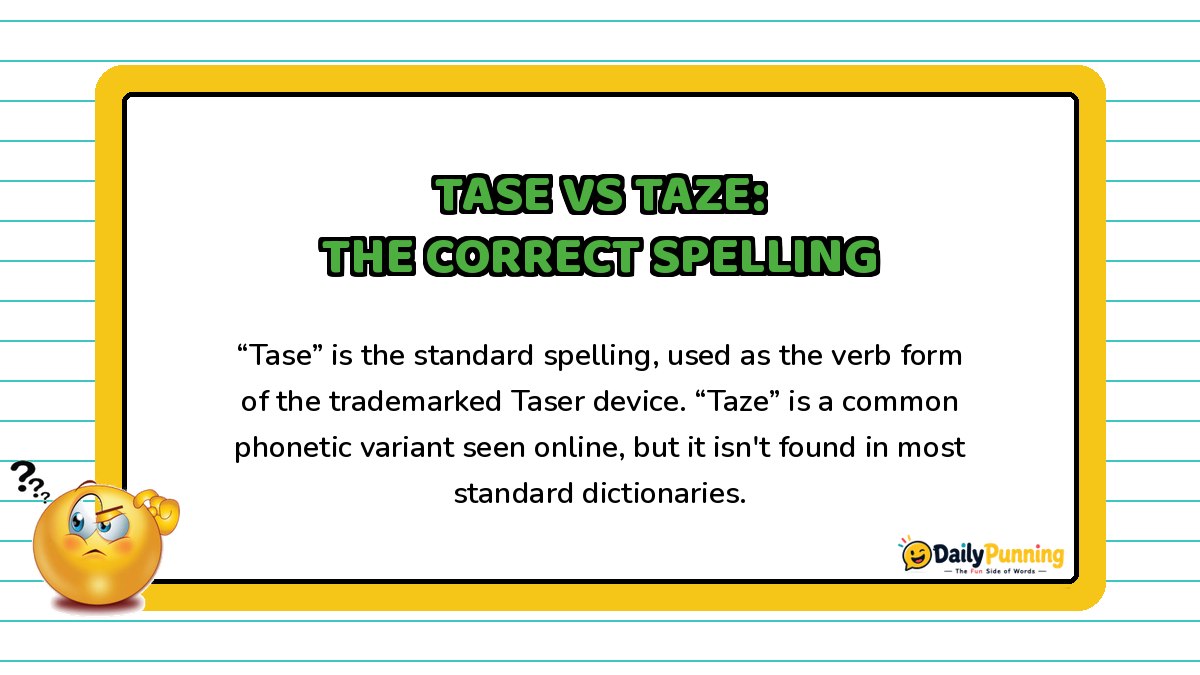
Let’s get straight to the answer: in the tase vs taze debate, “tase” is the correct and widely accepted spelling. 🎯
- ✅ Tase (correct)
- ❌ Taze (common misspelling)
Whenever you’re describing the act of using a stun gun device on someone, “tase” is the spelling recognized by major dictionaries, including Merriam-Webster. “Taze” is a phonetic misspelling that shows up frequently online, but it isn’t the standard or dictionary-recognized form.
Where Does the Word “Tase” Come From? 📜
To fully understand tase vs taze, it helps to know the word’s origin. “Tase” comes directly from the brand name Taser, a well-known electroshock weapon. Over time, as often happens with popular branded products, the name became “verbed” turned into an action word describing the use of the device, similar to how “Google” became “to google” something.
Since the original brand name is spelled “Taser” (with an “s,” not a “z”), the verb form logically follows the same spelling pattern, which is exactly why “tase” not “taze” is considered correct in the tase vs taze comparison.
Why Do People Confuse Tase vs Taze? 🤔
The confusion in tase vs taze almost entirely comes down to pronunciation. When spoken aloud, “tase” sounds like it could easily be spelled with a “z,” similar to words like:
- Maze
- Daze
- Craze
- Blaze
Because these common English words use “z” for that same “zzz” sound, people naturally assume “taze” follows the same pattern. However, since “tase” is derived directly from the brand name “Taser,” it keeps the original “s” spelling instead of following the more common phonetic “z” pattern seen in unrelated words.
Is “Taze” Ever Correct? ❌
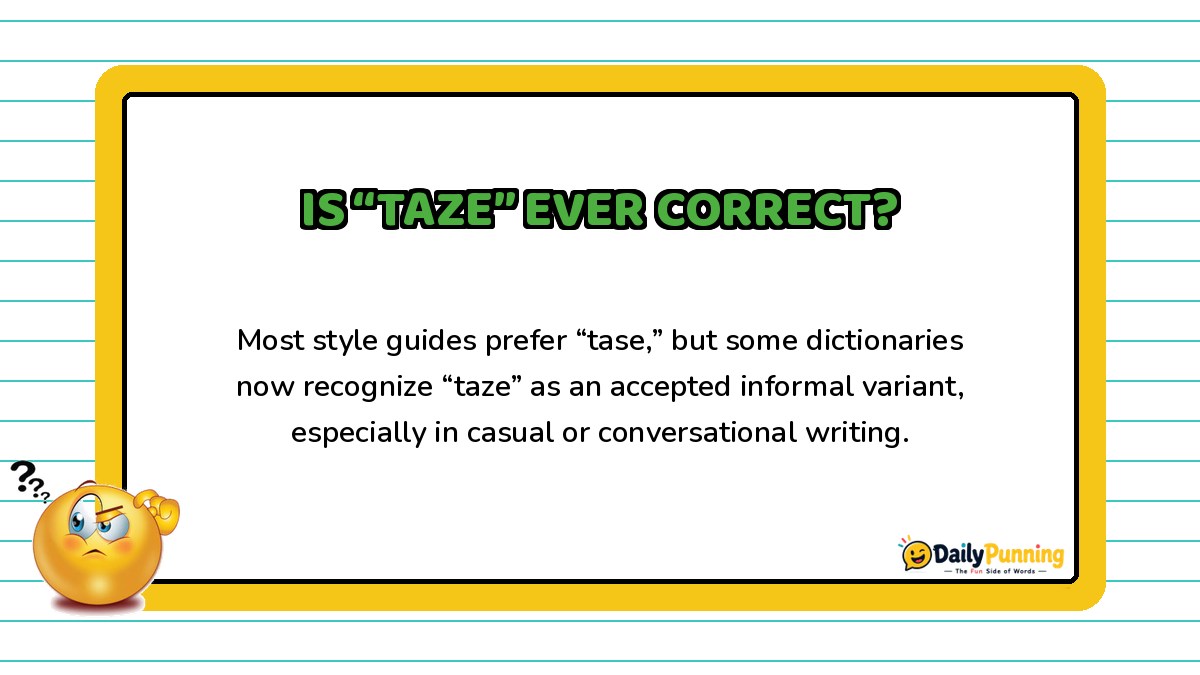
To be fully clear on tase vs taze: “taze” is not recognized as a standard spelling in major dictionaries. It’s essentially a misspelling based on how the word sounds rather than its actual origin. Unlike some words that have valid regional spelling differences (such as “colour” vs. “colour”), this isn’t a case of regional variation “taze” is simply an incorrect spelling that has become common due to how naturally it seems to fit typical English spelling patterns.
What Does “Tase” Mean? ⚡
Beyond just the tase vs taze spelling question, it’s worth understanding the word’s actual meaning. “To tase” means to shock or subdue someone using a Taser or similar electroshock device, typically used by law enforcement or in self-defense situations. It’s almost always used as a verb describing this specific action, such as:
- “The officer tased the suspect after he refused to comply.” 🚓
- “She was tased during the altercation.” ⚡
- “Police are trained on when it’s appropriate to tase someone.” 📋
Grammar Breakdown of “Tase” 📖
Understanding the grammar behind tase vs taze makes the correct spelling easier to remember:
- Root word: “Taser” (brand name / noun)
- Verb form: “tase” (drops the “r,” keeps the “s”)
- Past tense: “tased”
- Present participle: “tasing”
This pattern trimming a brand name down into a simpler verb form is common in English, similar to how “Xerox” became “to xerox” a document. Since the original word is “Taser,” not “Tazer,” the verb logically stays consistent with an “s,” reinforcing why “tase” wins the tase vs taze debate.
Common Mistakes People Make ⚠️
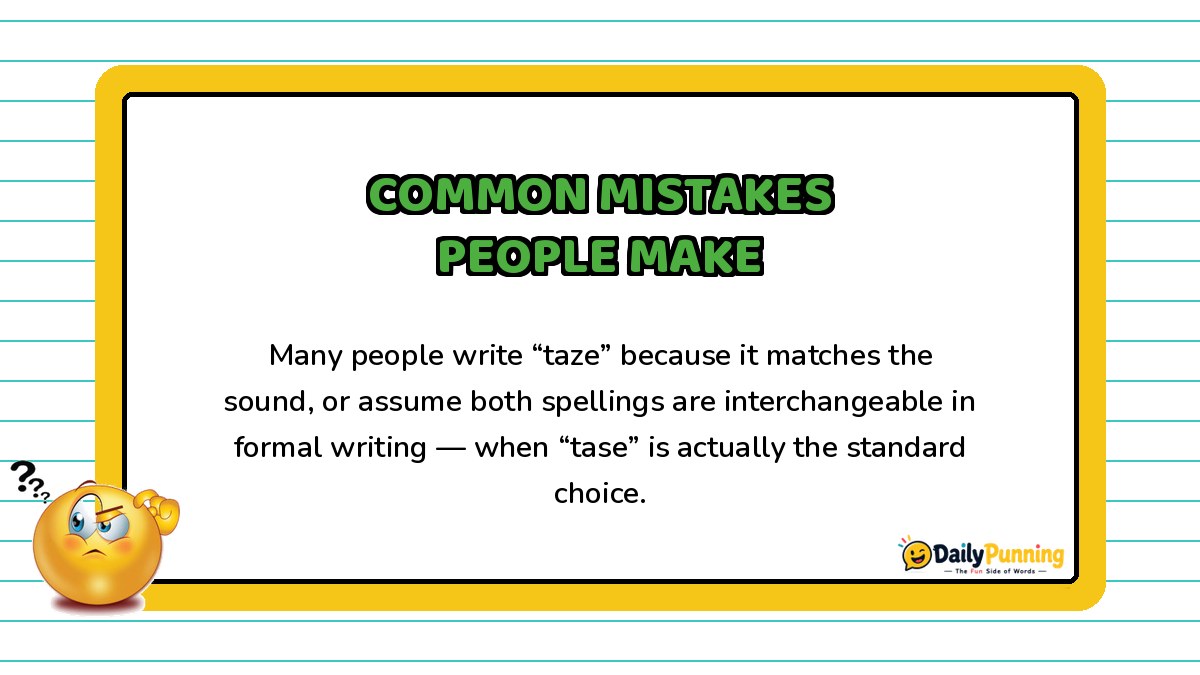
When people search tase vs taze, it’s usually because of one of these common issues:
- Phonetic spelling – assuming the word follows the same “z” pattern as “maze” or “daze”
- Unfamiliarity with the brand origin – not realizing the word comes from “Taser,” which uses an “s”
- Autocorrect inconsistency – some spellcheck tools may not immediately flag “taze” as incorrect
- Regional or casual usage – seeing “taze” used casually online, which reinforces the misspelling further
Recognizing these common causes helps explain why the tase vs taze mix-up is so widespread, even though “tase” is the dictionary-correct form.
Example Sentences Using “Tase” 📚
Seeing the correct word used naturally in context can help lock in the right answer to tase vs taze for good:
- “The security guard threatened to tase the intruder.” 🚨
- “He was tased after resisting arrest.” ⚡
- “Officers are only allowed to tase someone under specific guidelines.” 📋
- “The training video showed proper procedure for when to tase a suspect.” 🎥
- “She had never been tased before and was shocked by the experience.” 😲
How to Remember the Correct Spelling 💡
If you still find yourself second-guessing tase vs taze, here are a few simple memory tricks:
- Remember the brand origin: “Taser” has an “s,” so “tase” keeps that same “s”
- Don’t rely on sound alone: many English words that sound like they need a “z” actually use an “s” instead
- Compare with the noun: if you can spell “Taser” correctly, just drop the “r” to get “tase”
- Practice with sentences: writing out a few example sentences helps reinforce the correct spelling over time
Why This Spelling Confusion Is So Common 🔍
It might seem surprising that so many people search tase vs taze online, but it makes sense given a few factors:
- The word is derived from a brand name that many people don’t consciously think about while typing
- English has plenty of “z” sound words spelled with “z” (maze, daze, craze), creating a false pattern
- Casual online writing often skips spellcheck, allowing “taze” to spread through repetition
- Voice-to-text and casual messaging often introduce phonetic spelling errors
All of these factors combine to make tase vs taze one of the more frequently searched spelling questions related to law enforcement and self-defense topics.
Tase in Everyday and Legal Contexts ⚖️
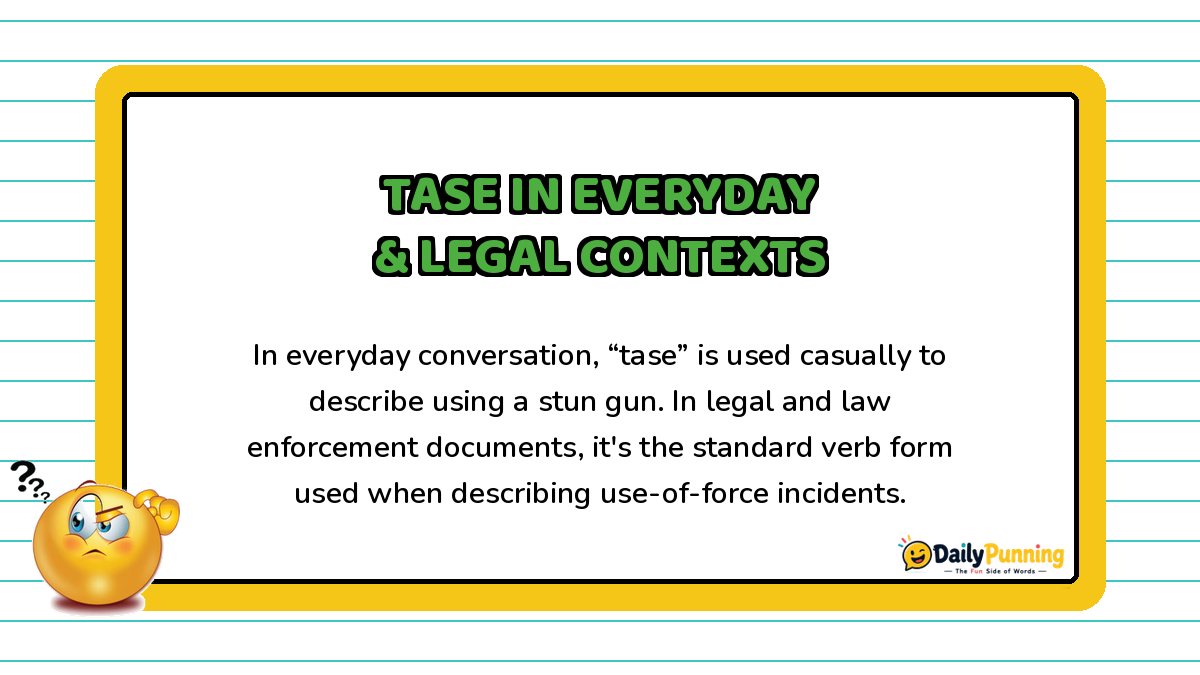
Understanding how “tase” is used across different contexts also reinforces the correct answer in the tase vs taze debate:
- Law enforcement: Officers are trained on specific protocols for when it’s appropriate to tase a suspect 🚓
- News reporting: Articles describing incidents involving Tasers consistently use “tased” and “tasing” 📰
- Legal documents: Court records and legal reports referencing Taser use rely on the standard “tase” spelling ⚖️
- Everyday conversation: Casual references to being “tased” during a story or anecdote also follow this spelling
In every one of these contexts, “tase” not “taze” is the spelling you’ll consistently find in professional and dictionary-recognized use.
FAQs ❓
Is it tase or taze?
“Tase” is the correct and dictionary-recognized spelling. “Taze” is a common phonetic misspelling.
Why is “tase” spelled with an “s” instead of a “z”?
Because it comes directly from the brand name “Taser,” which uses an “s,” not a “z.”
Is “taze” ever considered correct?
No, it’s not recognized in standard dictionaries it’s simply a common misspelling based on pronunciation.
What does “tase” mean?
It means to shock or subdue someone using a Taser or similar electroshock device.
How can I remember the correct spelling?
Just remember that “Taser” has an “s,” so the verb form “tase” keeps that same spelling.
Conclusion 🏁
So, when it comes to tase vs taze, the answer is clear: “tase” is correct, and “taze” is a common but incorrect phonetic misspelling. Understanding the word’s origin from the brand name “Taser” makes the correct spelling much easier to remember going forward.
Next time you’re writing about this topic, whether in a news piece, a story, or a casual message, you’ll know exactly which spelling to use with full confidence. ✅⚡


